A Day in Bianjing: The Golden Age Begins in the Streets汴京一日:黄金时代从街头开始
CLASSROOM ANCHOR / 课堂锚点Introduction - Prosperous Dynasty导论 - 繁荣王朝

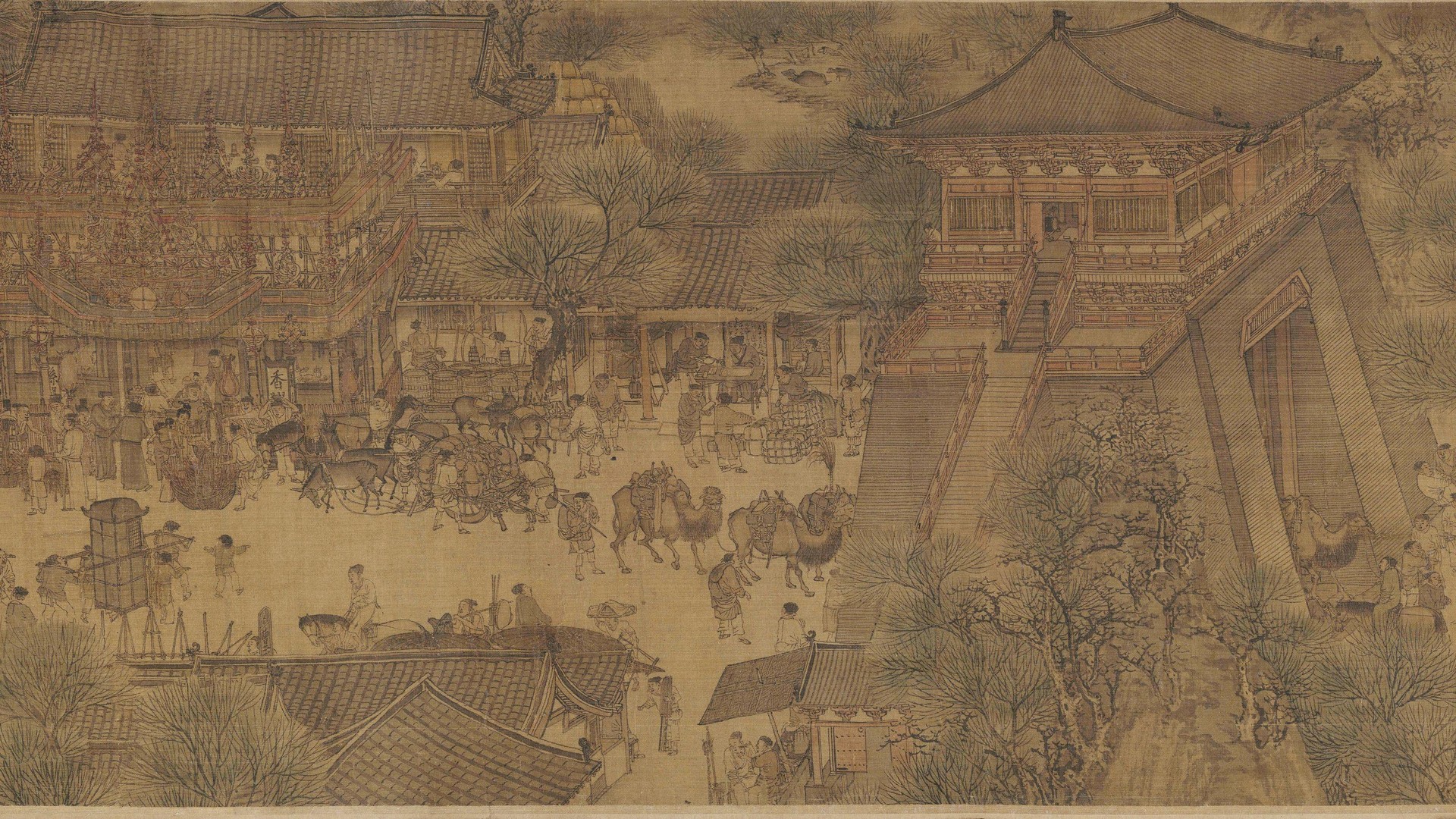
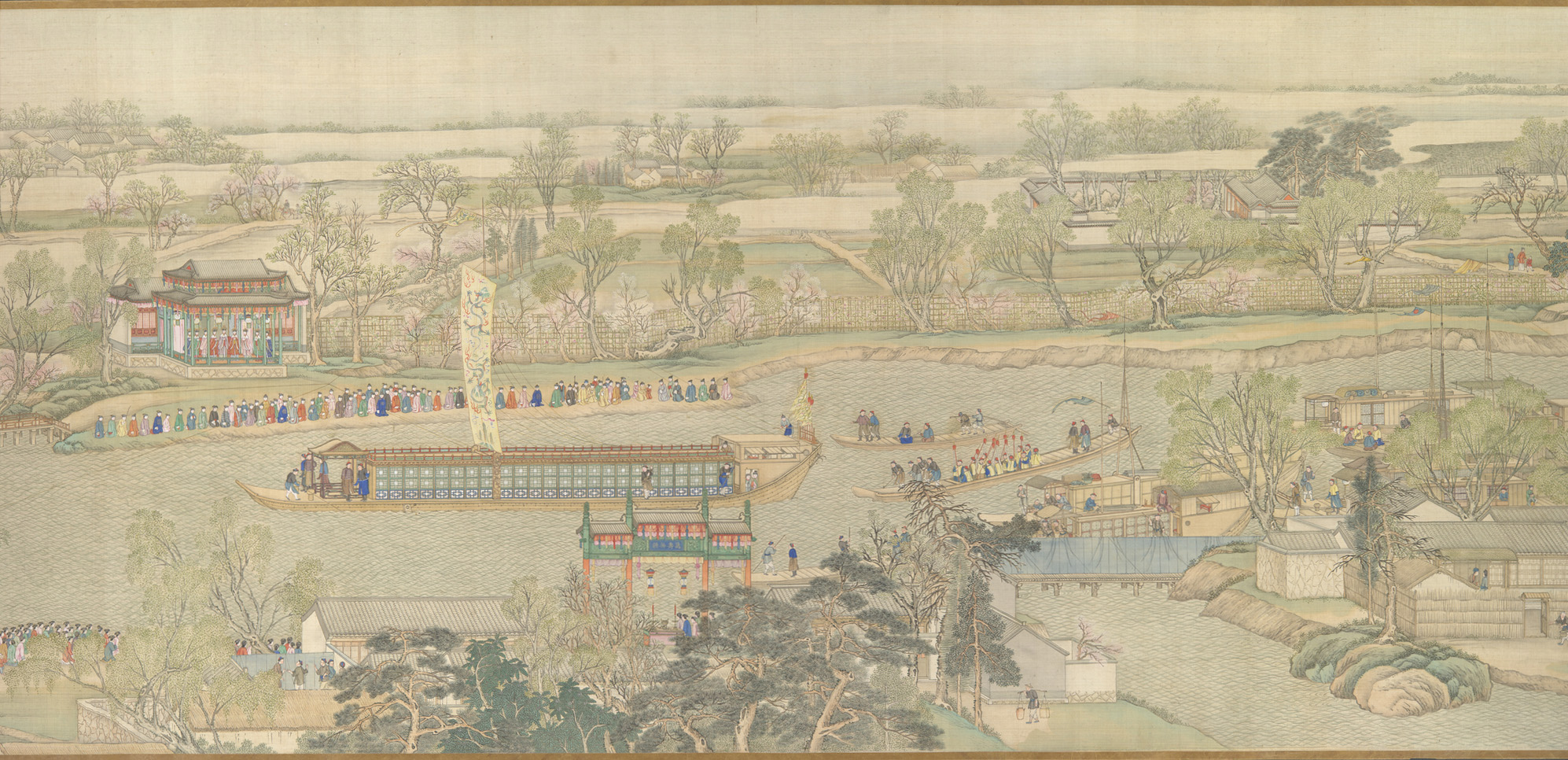
Welcome to twelfth-century Bianjing. Do not rush to look for an emperor or palace. Imagine that you have just entered through the city gate: boats, bridges, vendors, porters, and customers create the city's rhythm together. Today's task is to move beyond a list of Song inventions and identify the institutions, resources, and knowledge that kept this city running.欢迎来到十二世纪的汴京。先别急着寻找皇帝或宫殿,请把自己想象成刚刚走进城门的旅行者:船只、桥梁、摊贩、脚夫和顾客共同形成了城市的节奏。今天的任务是越过一张“宋代发明清单”,找出让这座城市持续运转的制度、资源和知识。
OBSERVE FIRST / 请先观察
Read the City from River to Gate沿河读懂一座城市
- 01
Follow the river from the outskirts toward Rainbow Bridge and the city gate. Identify visual evidence of transportation, markets, and occupational specialization.沿河从郊外走向虹桥和城门,分别找出运输、市场和职业分工的视觉证据。
- 02
Choose one visible piece of infrastructure and infer what kind of state or local organization was required behind it.选择一个看得见的基础设施,并推测它背后需要怎样的国家或地方组织。
- 03
Identify one busy scene, then write down something the painting cannot tell us.找出一处繁忙场景,同时写下这幅画不能告诉我们的信息。
MR. ZHAN'S GUIDE / 詹老师有话说
Prosperity Worked as a System繁荣依靠一套共同运转的系统
Song bureaucratic stability, economic transformation, and cultural creativity reinforced one another, creating a durable system of prosperity.宋代的官僚稳定、经济革命与文化创造彼此支撑,共同维系了一套持续运转的繁荣体系。
CORE QUESTION / 核心问题
If you could select only three details from the painting to prove that the Song economy was highly commercialized, which would you choose? What reasoning would each piece of evidence require?如果只能从画面中选择三处证据来证明“宋代高度商业化”,你会选择哪里?每一处证据需要怎样的推理?
HISTORICAL INTERPRETATION / 历史解释Open after completing your observation完成观察后再展开
Along the River During the Qingming Festival makes the "commercialized society" discussed in Mr. Zhan's class visible: goods enter the city by water and land, specialized workers provide services, and markets connect strangers. Urban prosperity depended on officials who collected taxes and maintained order, together with agricultural surplus, canals, and money. This evidence leads to the chapter's central question: How did a powerful bureaucracy and a revolutionary economic base work together to sustain Song innovation and influence across East Asia?《清明上河图》让詹老师课堂上讲到的“商业化社会”变得可见:货物通过水陆交通进入城市,专业劳动者提供服务,市场把陌生人连接起来。城市繁荣依靠官僚征税与维持秩序,也依靠农业剩余、运河和货币。这些证据把我们带到全章中心问题:强大的官僚制度与革命性的经济基础,如何共同支撑宋代的创新与东亚影响?
HISTORICAL STORY / 历史小故事
Bianjing after Dark夜幕下的汴京
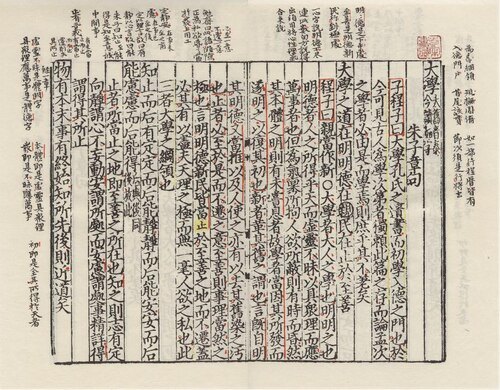
Written in the early Southern Song, Dreams of Splendor of the Eastern Capital recalls Northern Song Bianjing. Meng Yuanlao noted that night markets could operate until the third watch, while morning markets opened again at the fifth watch. For city residents, prosperity extended beyond daylight: lamps, food, transport, and night patrols sustained an almost continuous urban life.《东京梦华录》成书于南宋初,孟元老在书中回忆北宋汴京:夜市可以营业到三更,五更又有早市开张。对城市居民来说,繁荣并不止于白天;灯火、食品、运输和巡夜秩序维持着几乎不停歇的城市生活。
OBJECT FILES / 展品档案
Explore the evidence继续探索这些实物与史料
Core Object C1-001, full scroll of Along the River During the Qingming Festival核心主展品 C1-001《清明上河图》全卷
Along the River During the Qingming Festival《清明上河图》全卷
- DATE / 年代
- Northern Song, early 12th century北宋,12世纪初
- PLACE / 地点
- Bianjing (present-day Kaifeng), Northern Song北宋汴京(今开封)
- INSTITUTION / 馆藏
- Palace Museum, Beijing; digital file via Wikimedia Commons故宫博物院藏;Wikimedia Commons 数字文件页
YOUR EVIDENCE / 你的证据
Record your judgment in the passport在护照上留下判断
AP SKILLS / AP 技能Visual source analysis; evidence and reasoning; establishing a central claim视觉史料观察;证据与推理;建立中心论点


 微信号: zhanhistory